According to the PMBOK® Guide and the PMI Guide to Business Analysis, during a requirements workshop, the facilitator must employ interpersonal and team skills to effectively extract underlying needs and " pain points " from stakeholders.
Why Choice D is correct: Active Listening is a communication technique that involves more than just hearing words; it requires the listener to observe body language, acknowledge feelings, and provide feedback to confirm understanding. In this scenario, the practitioner is facilitating a workshop where users are describing a specific, repetitive frustration (the " pain point " of clicking thousands of times). By using active listening, the practitioner is able to identify the emotional and operational significance of this requirement—recognizing that it isn ' t just a functional request, but a critical usability issue. This technique allows the practitioner to " read between the lines " of user complaints to define formal requirements.
Analysis of other options:
A (System thinking): This involves looking at how different parts of a system interrelate. While relevant to the solution ' s design, it is not the primary technique used to hear and identify a user ' s specific manual frustration during a conversation.
B (User acceptance testing): UAT occurs at the end of a project or phase to verify that the solution meets the requirements. It is not a technique used during an initial requirements-gathering workshop.
C (Decision-making): This refers to the process of selecting a course of action from different alternatives (e.g., voting or multicriteria decision analysis). It follows the identification of the problem but is not the tool used to discover the problem itself.
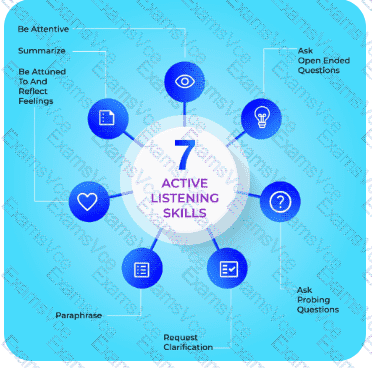
By applying Active Listening within the Collect Requirements process, the practitioner ensures that the voice of the customer is accurately captured, leading to a more efficient and user-friendly final product.



