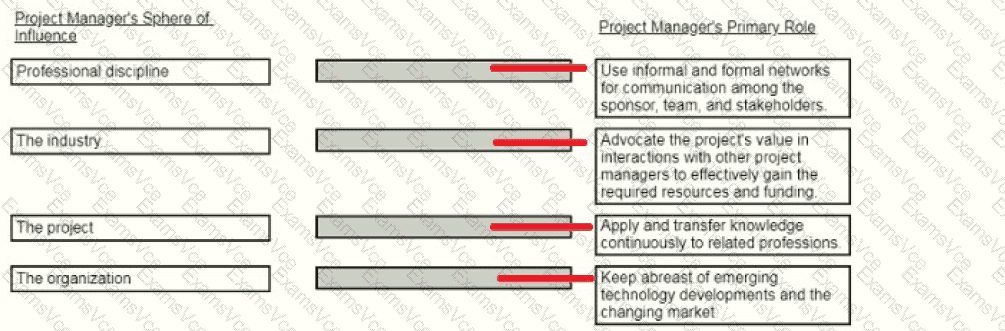
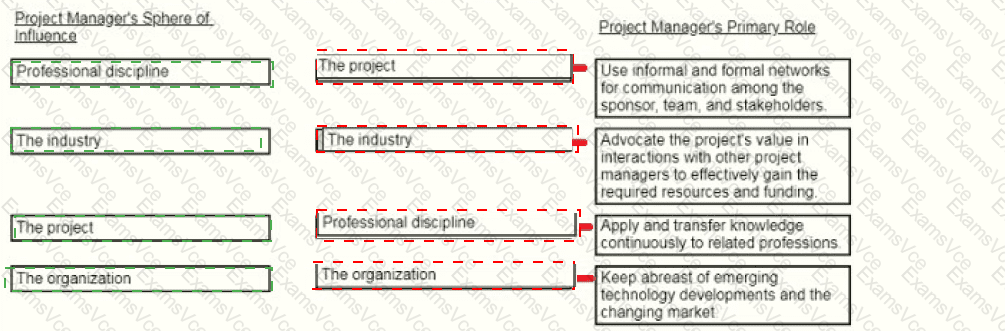
Professional discipline: Apply and transfer knowledge continuously to related professions.
The industry: Advocate the project ' s value in interactions with other project managers to effectively gain the required resources and funding.
The project: Use informal and formal networks for communication among the sponsor, team, and stakeholders.
The organization: Keep abreast of emerging technology developments and the changing market.
The PMBOK® Guide describes the Project Manager as the center of a series of influence circles. Their effectiveness depends on how well they navigate these different levels:
The Project: At the core, the PM leads the project team. Their primary role here is integration and communication. They act as the " hub " connecting the sponsor, the team, and various stakeholders to ensure everyone is aligned with the project ' s goals.
The Organization: Beyond the immediate team, the PM interacts with other project managers, functional managers, and executive leadership. A key role in this sphere is competing for or negotiating for shared resources and funding, often by demonstrating how their project supports the organization ' s strategic goals.
Professional Discipline: PMs have a responsibility to the project management community. This involves contributing to the profession by sharing lessons learned, mentoring others, and transferring knowledge across related fields (such as engineering, IT, or finance).
The Industry: The outermost layer involves the broader market. A top PM must stay informed about industry trends, regulatory changes, and technological advancements to ensure their project doesn ' t become obsolete or non-compliant before it is even finished.
When matching these, look for keywords:
Project = Communication with the Team/Sponsor.
Organization = Resources/Funding/Advocacy.
Professional Discipline = Knowledge transfer/Mentoring.
Industry = Market trends/New technology.