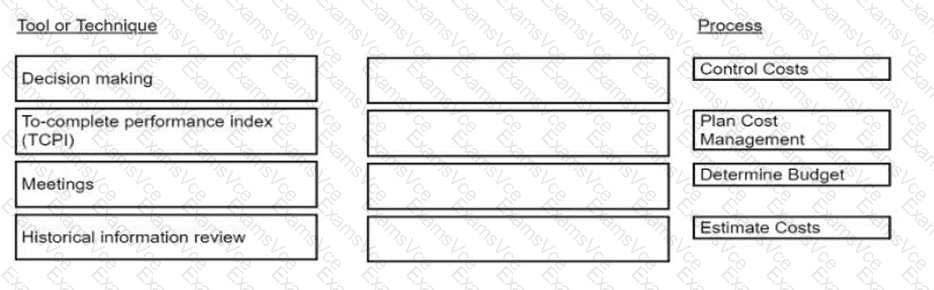
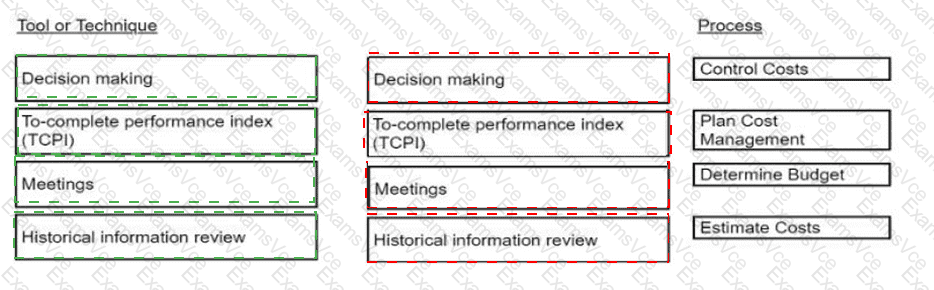
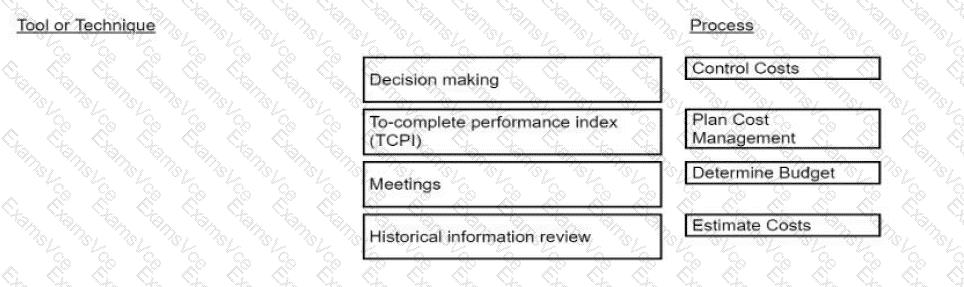
 A close-up of a list Description automatically generated
According to the PMBOK® Guide, Project Cost Management consists of four processes. Each has a distinct set of Tools and Techniques (TandT) designed to move the project from high-level planning to granular financial control.
Plan Cost Management (Expert Judgment): This is the initial process that establishes the policies and documentation for planning and controlling costs. Expert Judgment, based upon historical information and specialized knowledge in a particular area, is the primary tool used to determine how costs will be managed throughout the project lifecycle.
Estimate Costs (Analogous Estimating): This process involves developing an approximation of the monetary resources needed to complete project work. Analogous Estimating (using values from a similar past project) is a key technique used here, especially when there is limited detail available.
Determine Budget (Cost Aggregation): This process aggregates the estimated costs of individual activities or work packages to establish an authorized cost baseline. Cost Aggregation is the specific technique where work package cost estimates are summed up through the WBS levels to reach the total project budget.
Control Costs (To-Complete Performance Index - TCPI): This is the monitoring and controlling process. TCPI is a specialized tool used to calculate the cost performance that must be achieved with the remaining resources to meet a specific management goal (either the original Budget at Completion or a new Estimate at Completion).
Per PMI standards, understanding the placement of these tools is essential for maintaining the Cost Baseline and ensuring the project is completed within the approved budget. Each tool serves a specific chronological purpose, from the " Top-Down " approach of Analogous Estimating to the " Bottom-Up " summation of Cost Aggregation.