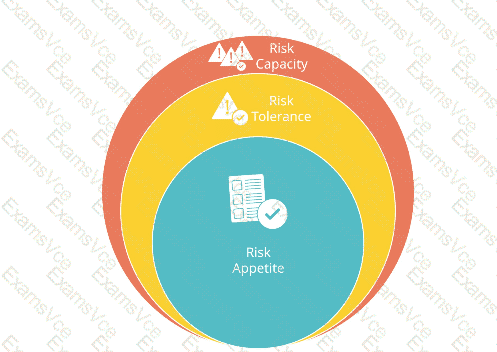
According to the PMBOK® Guide (Project Management Body of Knowledge) and the PMI Lexicon of Project Management Terms, it is crucial to distinguish between " Appetite " and " Tolerance, " as they are often confused in practice:
Risk Tolerance: This is specifically defined as the specified range of acceptable results or the degree, amount, or volume of risk that an organization or individual is willing to withstand. It represents a measurable threshold. For example, a project might have a budget tolerance of plus or minus 10%. If the risk threatens to exceed that 10%, it is beyond the organization ' s tolerance.
Risk Appetite (Option B): This is the degree of uncertainty an organization or individual is willing to accept in anticipation of a reward. It is a more general, high-level guiding principle or " hunger " for risk rather than a specific measurable volume of withstandable risk.
Risk Analysis (Option A): This is the process of examining identified risks to estimate the probability and impact. It is a step in the Risk Management process, not a measurement of the capacity to withstand risk.
Risk Response (Option D): This refers to the specific actions or strategies (such as Avoid, Transfer, Mitigate, or Accept) taken to address risks once they have been analyzed.
In the context of the Standard for Risk Management in Portfolios, Programs, and Projects, " Tolerance " acts as the measurable boundary for " Appetite. " Because the question specifically asks for the " degree, amount, or volume " that can be withstood, Tolerance is the most precise and verified term.