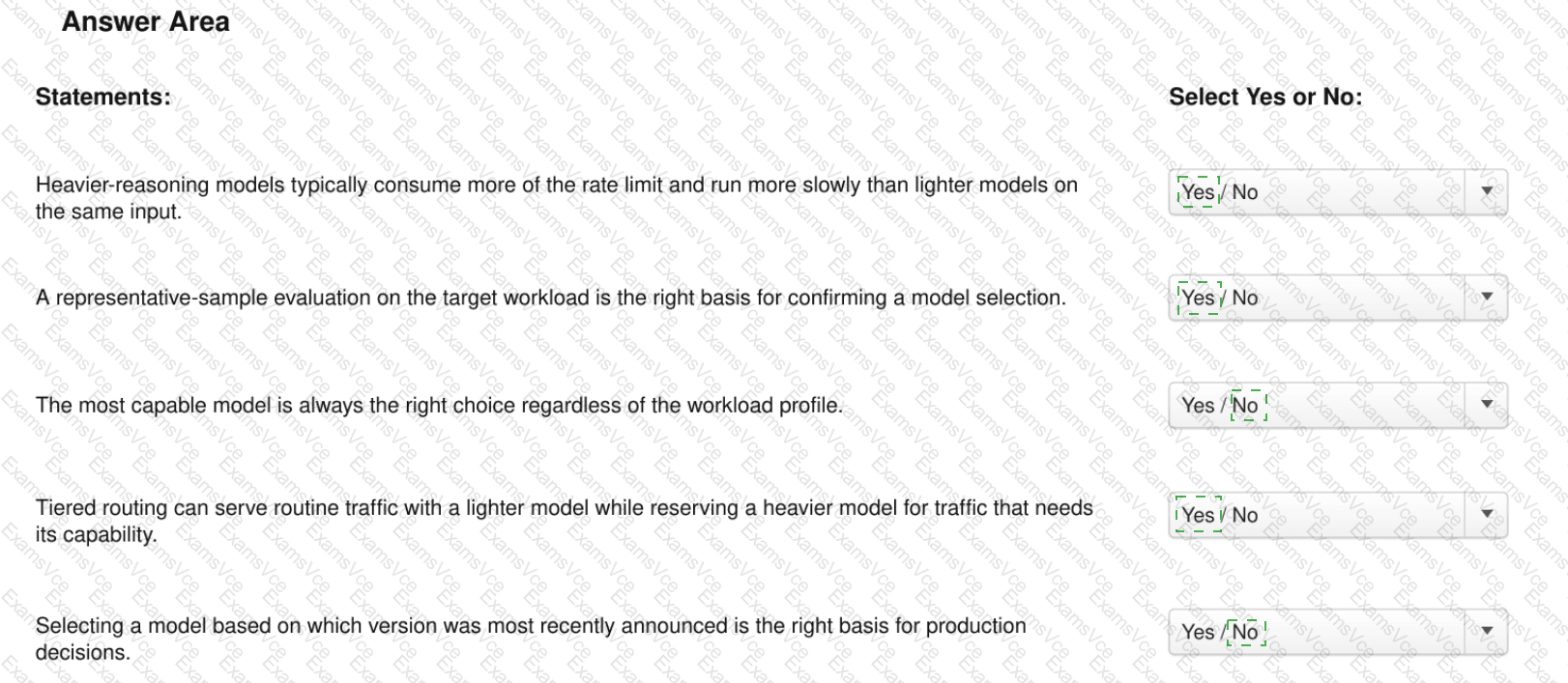
Yes, Yes, No, Yes, No
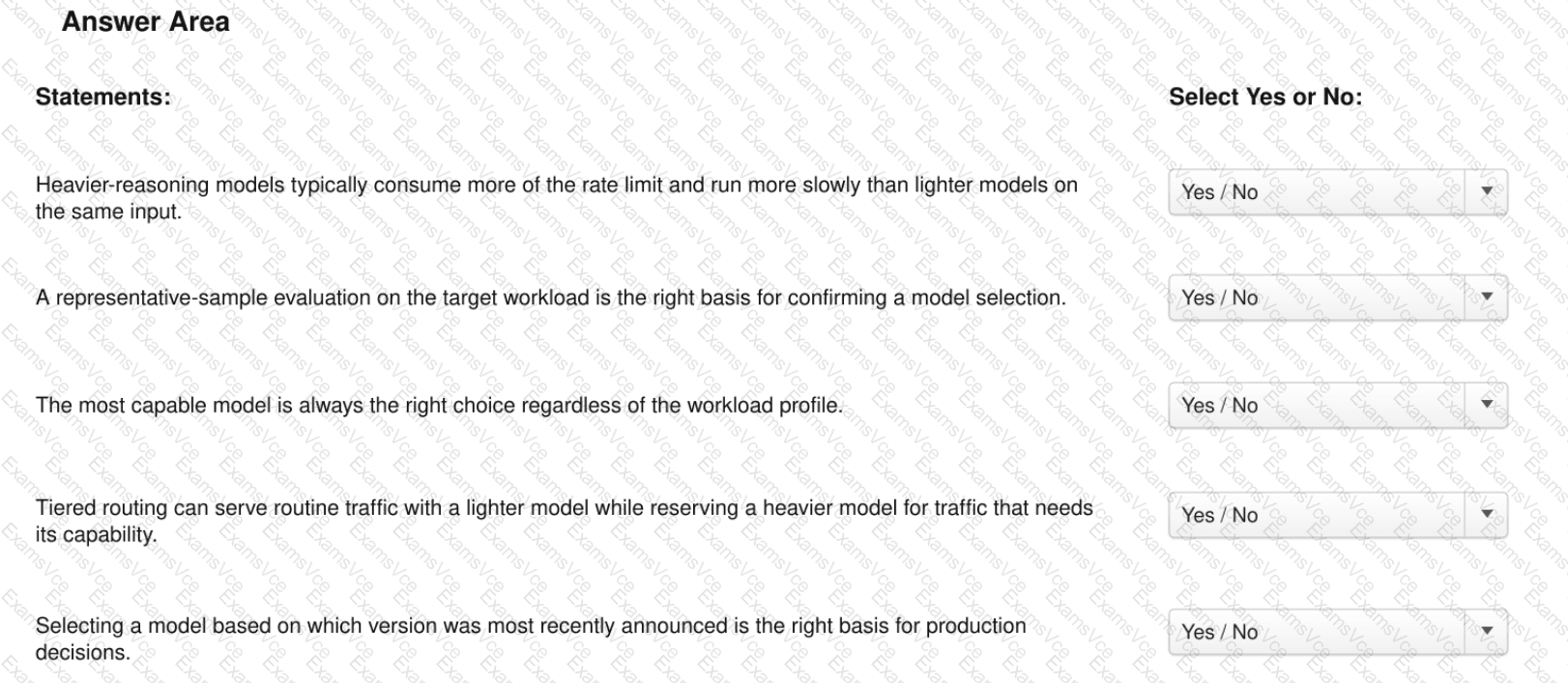
More capable reasoning configurations generally require greater computation, produce higher latency, and may consume larger token or rate-limit allocations than lighter alternatives. This makes the first statement generally accurate, although actual performance must be measured under the organization’s specific provider and service tier.
Representative workload testing is essential because generic benchmark rankings do not establish performance on the organization’s prompts, data, edge cases, tools, or required output format. Anthropic recommends benchmark tests specific to the use case, using actual prompts and data, followed by comparison of accuracy, quality, edge-case behavior, and cost. Choosing the Right Model
The strongest model is not automatically the correct production choice. Model selection must balance capability, speed, cost, throughput, and operational constraints. Tiered routing implements this principle by serving predictable requests with an efficient model and escalating difficult cases to a more capable model. Anthropic documents multi-model strategies in which lower-cost workers handle most traffic while harder decisions are escalated.
Recency is also not a valid selection criterion. A newly announced model must pass the workload’s existing evaluation, security, latency, and cost gates before replacing a validated production model.
Study Guide references/topics: Model trade-offs; representative evaluations; tiered routing; escalation architectures; cost–capability optimization; model migration validation.
===============