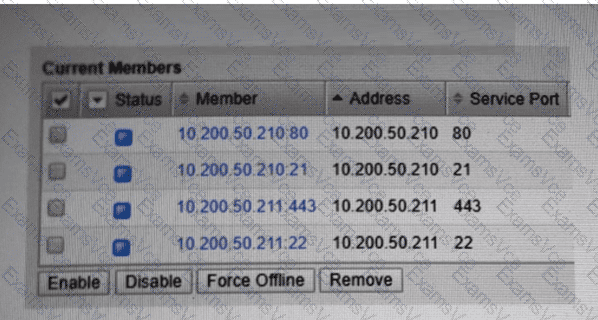
From the exhibit, the pool containsdifferent applications on different service ports(for example, HTTP/80, FTP/21, HTTPS/443, SSH/22). To mark pool members correctly, BIG-IP must be able to verify theactual servicerunning on each member’s port.
InBIG-IP Administration: Data Plane Configuration, monitor behavior is described as follows:
Whenmultiple monitorsare assigned to a pool, theAvailability Requirementcontrols how monitor results are evaluated:
At least one= the pool member is markedupifany oneof the assigned monitors succeeds.
All= the pool member is markeduponly ifeveryassigned monitor succeeds.
For pools containing members with different services/ports, usingAllcan incorrectly mark members down because monitors intended for other services will fail on the wrong port.
WhyCis correct:
AssigningHTTPS, HTTP, FTP, and SSHcovers the actual services shown in the pool.
Setting the Availability Requirement toat least oneensures that each pool member is consideredavailablewhen itsappropriateservice monitor succeeds, without being forced to pass unrelated service monitors.
Why the other options are incorrect:
A / D (Availability Requirement = all):would cause members to be markeddownwhen unrelated monitors fail (e.g., SSH monitor against an HTTP member).
B (includes ICMP):ICMP can indicate the host is reachable even if theapplication service is down, which does not “accurately” reflect service availability.
Therefore, the best choice isHTTPS, HTTP, FTP, and SSHwith Availability Requirement ofat least onehealth monitor.