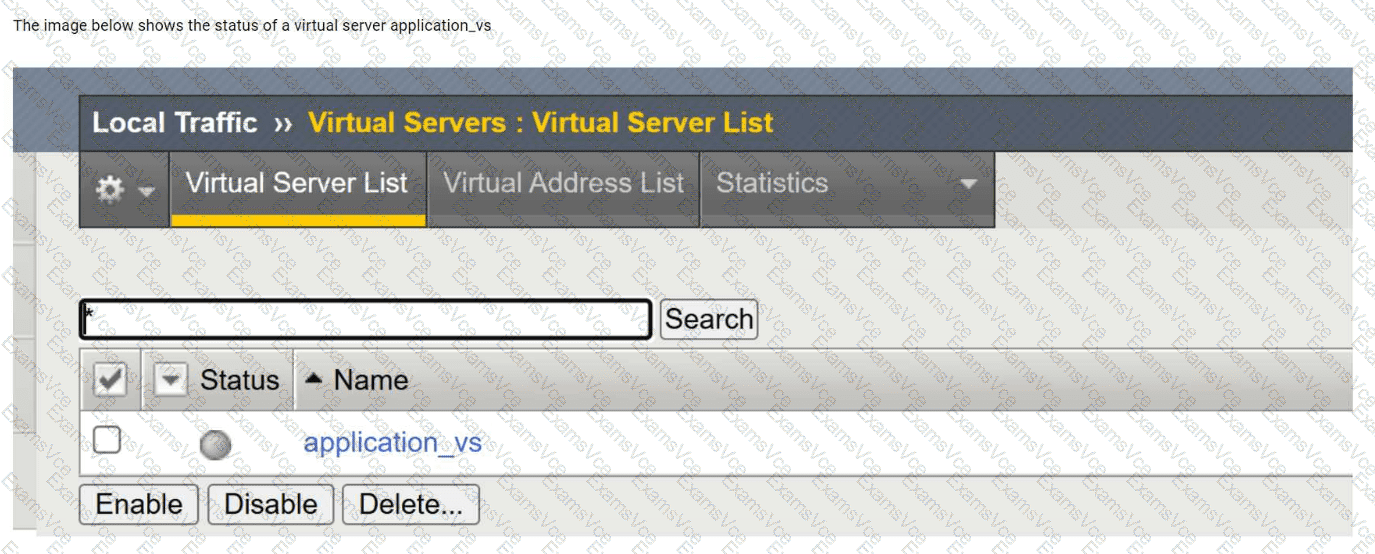
The exhibit shows the virtual serverapplication_vswith a status indicating it isoffline but enabled. In BIG-IP terminology, this status means the virtual server itself is administratively enabled, but it is unable to pass traffic becauseno usable pool members are available.
Two common and documented causes for this condition are:
Pool member(s) administratively disabled (Option A):When all pool members are administratively disabled, BIG-IP removes them from load-balancing decisions. Even though the virtual server remains enabled, it has no available pool members to send traffic to, resulting in an offline status.
Node(s) administratively disabled (Option C):Pool members inherit the status of their parent nodes. If a node is administratively disabled, all associated pool members are also marked unavailable. This condition causes the virtual server to show as offline, even though the virtual server configuration itself is correct.
The other options are incorrect:
Forced offline pool members (Option B)result in a different operational intent and are explicitly set for maintenance scenarios.
Virtual server administratively disabled (Option D)would show the virtual server as disabled, not enabled/offline.
This behavior is consistent with BIG-IP traffic management logic and is commonly verified by reviewingpool and node availability stateswhen diagnosing virtual server availability issues.