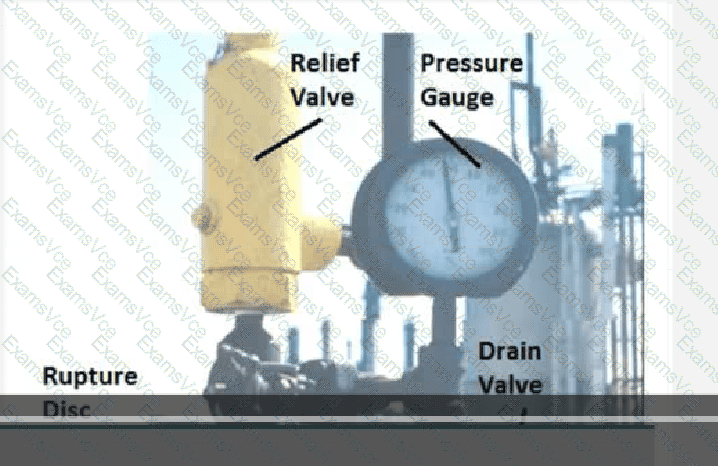
The correct answers are B and D because they highlight subtle but critical deficiencies in the pressure relief system configuration , consistent with CCPS guidance.
Option B is correct because the presence of additional components (such as a pressure gauge connection or trapped pressure between the rupture disc and relief valve) can lead to pressure buildup on the downstream side of the rupture disc . This backpressure increases the effective burst pressure , meaning the disc may not rupture at its intended setpoint, thereby compromising overpressure protection.
Option D is also correct because if the rupture disc is intended to protect the relief valve from corrosion , any leakage, improper installation, or pressure buildup in the space between the disc and valve can negate that protection . For example, corrosive process fluid could still reach the relief valve if the disc is not perfectly leak-tight or if the system is not properly maintained.
Option A is incorrect because current operating pressure does not guarantee safety— relief systems must function correctly during upset conditions . Option C is incorrect because placing a rupture disc upstream of a relief valve is an accepted practice when properly designed.
CCPS emphasizes that improper installation details can significantly degrade relief system performance , even when components appear correct.