Comprehensive and Detailed Explanation
HPE Press guide context | PDF page 1033 | HPE Press, Aruba Certified Associate – Campus Access Official Certification Study Guide
Technical Deep Dive — Original Chat Wording
A network speed test measures the data-transfer performance observed between a test endpoint and a selected test server.
The primary measurements commonly include download throughput, upload throughput, and sometimes latency.
Throughput indicates how much application data can be transferred over a connection during a specified period.
For example, a Gigabit Ethernet connection may negotiate at 1 Gbps but deliver lower measured throughput because of protocol overhead, congestion, server limitations, or endpoint performance.
A speed test helps determine whether the connection is delivering an acceptable level of performance under the conditions present during the test.
Wireless performance can also be affected by signal strength, channel utilization, interference, channel width, and client capabilities.
A latency check focuses on transmission delay rather than data-transfer capacity.
A ping test primarily measures reachability and round-trip time using ICMP.
A load test evaluates system behavior under a specified workload and may expose scalability problems, but it is not the most direct test for the available throughput requested here.
Importantly, measured throughput is not identical to the theoretical maximum bandwidth of a physical connection.
Administrators should compare results with the expected performance baseline and repeat tests when investigating intermittent problems.
Therefore, Option A (Speed test) is correct.
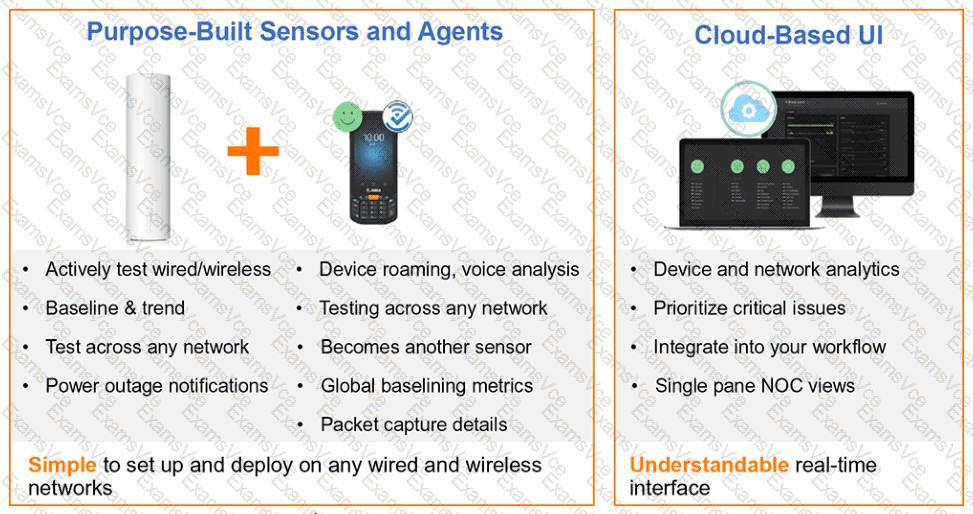
HPE Press study-guide figure / related learning illustration · Q143 Fig 13-38 UXI



