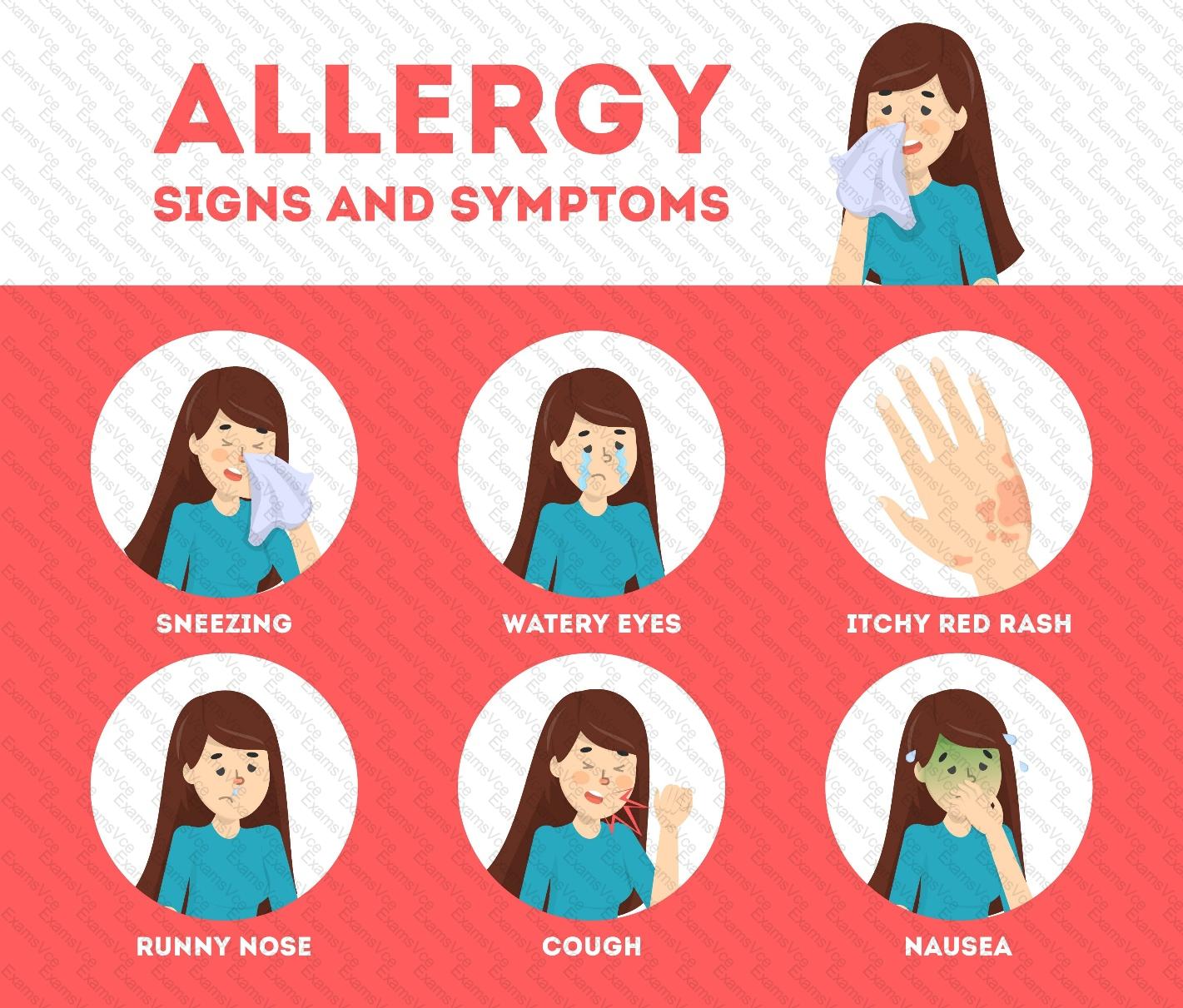
 Image of allergic reaction symptoms
Shutterstock
Food allergies are an immune system response to specific proteins in food. While symptoms can vary significantly between individuals,hives(urticaria)—which are itchy, raised red welts on the skin—are one of the most common and recognizable signs of an allergic reaction. Other typical symptoms include swelling of the face, lips, or tongue (angioedema), abdominal cramps, vomiting, and shortness of breath. In the most severe cases, a customer may experience anaphylaxis, a life-threatening condition that can cause the throat to close and blood pressure to drop.
It is crucial for food handlers to distinguish allergy symptoms from foodborne illness symptoms. Fever (Option A) is usually a sign of an infection (biological contamination). Jaundice (Option B), a yellowing of the skin and eyes, is a specific symptom ofHepatitis A, which requires the exclusion of the employee from the facility. Sneezing (Option D) is generally associated with respiratory issues or seasonal allergies, rather than food allergies. When a guest notifies staff of an allergy, the manager must ensure that "cross-contact" is prevented by using clean and sanitized equipment and preparing the meal separately. If a guest begins showing symptoms like hives shortly after eating, the manager should call emergency services immediately, as the reaction can escalate rapidly. Training staff to recognize these signs is a key component of the "Providing Safe Food" domain.



